
Is plastic packaging moving forward to reduce carbon emissions?
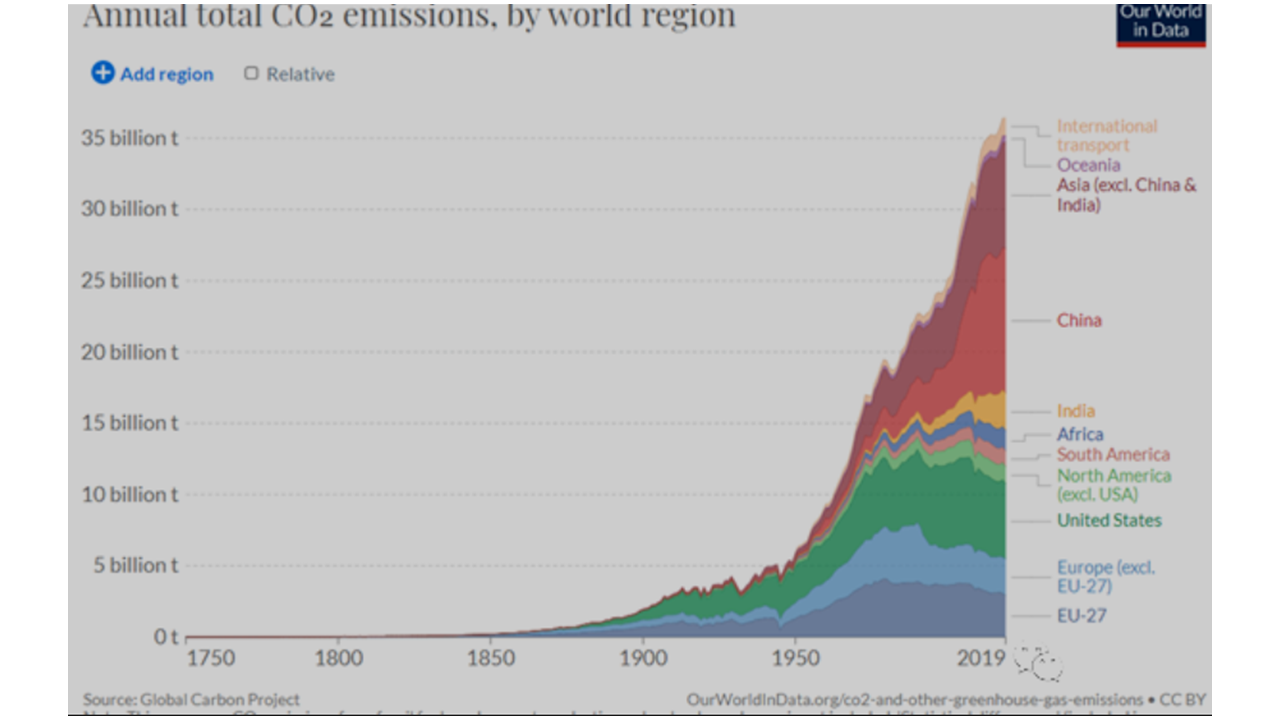
This interactive chart shows an analysis of global CO2 emissions by region. Before the 20th century, Europe and the United States accounted for the most global carbon emissions. In the 19th century, more than 90% of carbon emissions came from Europe or the United States; even by 1950, they accounted for more than 85% of emissions annually. But in recent decades, this situation has changed significantly. Over the course of the 20th century, we have seen a significant increase in emissions in other parts of the world, particularly throughout Asia, where China already accounts for the majority of emissions. The United States and Europe only account for one-third of global carbon emissions.
How can plastic packaging manufacturers contribute to reducing carbon emissions? In the past few years, Tongyuan has been promoting nano-wrap film. We have always taken reducing usage and improving the safety of palletized goods as indicators. The main core technology of nanomachine films is manufactured by 33-layer or 55-layer cast co-extrusion technology. Therefore, we must use the best raw materials to produce high-quality 10 micron or 12 micron nanomachine membranes. The two chemical companies Dow and Exxon also continue to develop high-performance raw materials to cooperate with us to improve the performance of stretch films, such as puncture resistance, tear resistance, stretch ratio, etc.
Directly reducing the use of plastic packaging also indirectly reduces energy consumption in the supply chain and logistics chain; in turn, carbon emissions will also be reduced. Our company's products include 5 micron "BOLT" hand-rolled films, 10 micron or 12 micron mechanical films; this series of nano-wrap films are developed to reduce plastic and carbon. In addition, our company will also vigorously promote a series of recycled green products. This blueprint for sustainable operations will obtain European ISCC Plus certification in 2022.
Under the concept of sustainable management, recycling is a very important concept in 3R (Reduce, Reuse, Recycle). Post Industrial Recycled (industrial waste recycling) and Post Consumer Recycled (consumer waste recycling) must have a complete management system to achieve the goal of zero pollution. Only under strict system control can recycled plastics be guaranteed to reach a certain level of safety for end customers in use.